A new pipe inside the old one. No excavation.
CIPP is the industry's proven, structural, long-term solution for rehabilitating aging sanitary and storm sewer mainlines — installed without digging up the road above.
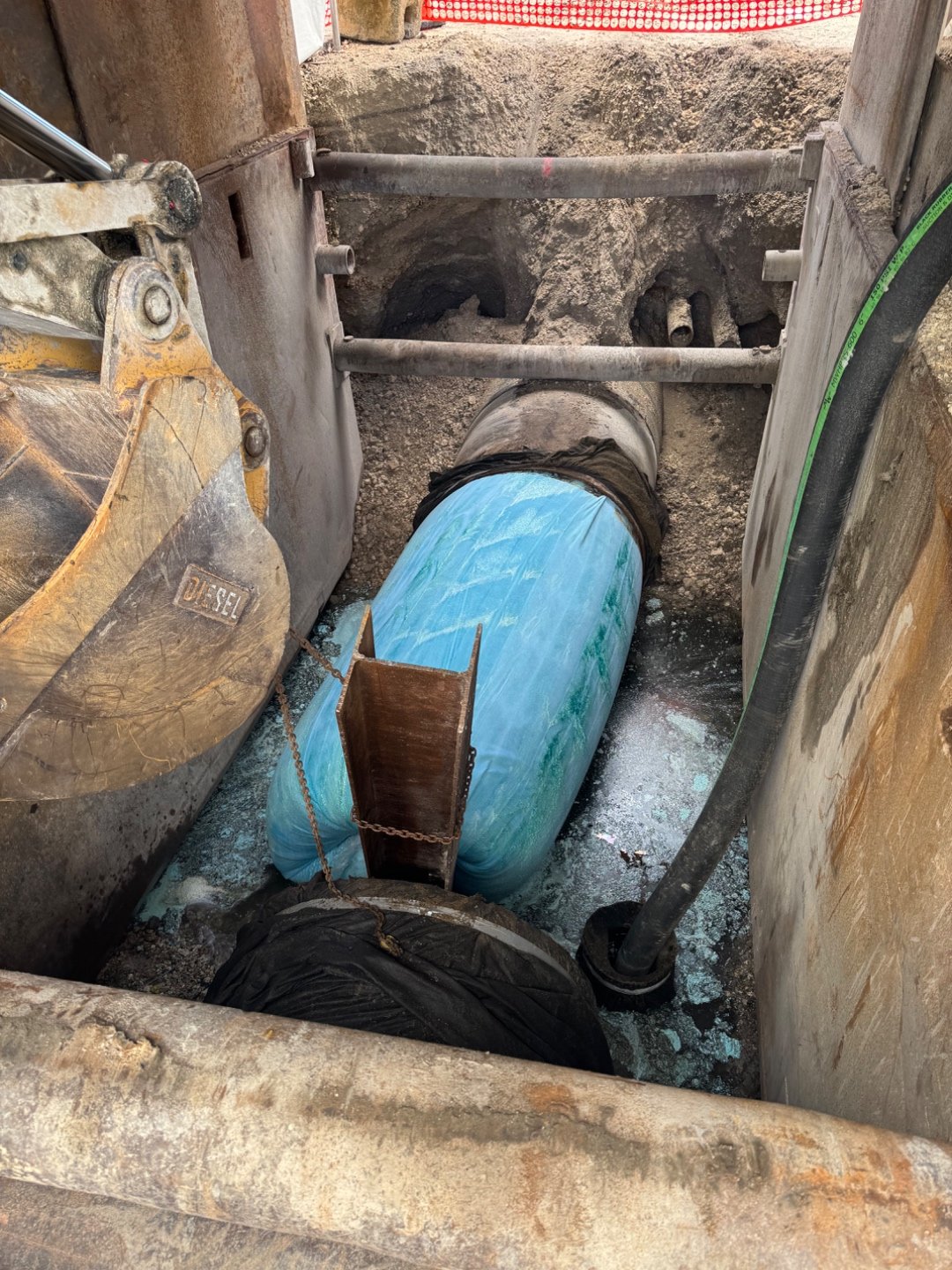
Resin-saturated felt tube, inverted and cured in place.
A flexible liner tube saturated with thermosetting resin is inverted or pulled into the host pipe through an existing manhole. Steam or hot-water curing hardens the resin against the pipe wall, creating a new structural pipe within the original bore — jointless, watertight, and bonded end-to-end.
- Zero excavation on the main run — access is through existing manholes
- Installed to ASTM F1216 (inversion) and F1743 (pull-in-place)
- Design life of 50+ years per typical municipal specifications
- Eliminates infiltration, exfiltration, and root intrusion
- Restores or improves hydraulic capacity via smoother Manning's coefficient
Every CIPP install follows the same four-step field discipline.
Pre-clean & inspect
High-pressure jet cleaning to remove debris, roots, and grease, followed by pre-installation CCTV to verify pipe condition, measure lateral locations, and confirm dimensions.
Bypass & stage
Sized-to-flow sewer bypass is set with redundant pumps. The liner is measured, wet-out on refrigerated wet-out or shipped ready-to-install, and staged at the insertion manhole.
Invert & cure
The liner is inverted or pulled through the host pipe, expanded to the pipe wall, and cured with steam or hot water to the resin manufacturer's cure profile.
Reinstate & verify
Robotic cutters reinstate every service lateral. Post-installation CCTV, samples for third-party testing, and full documentation are delivered with the closeout package.
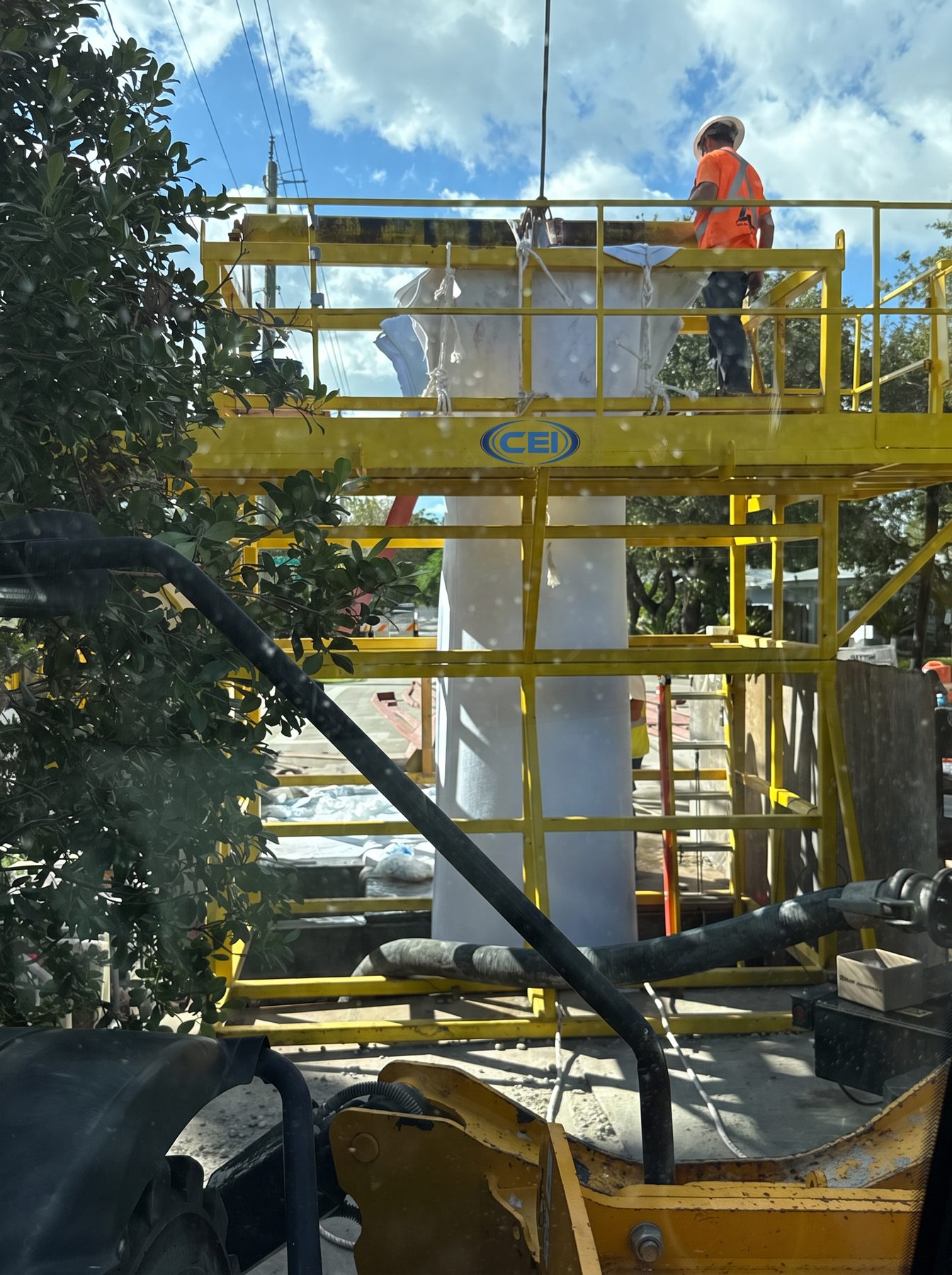
The tower is where physics meets discipline.
Every CIPP inversion runs off a purpose-built tower or drum with the liner fed under controlled head pressure. The operator on the platform manages liner feed rate, water column height, and lubrication in real time — while the crew below monitors the receiving manhole, pressure gauges, and cure profile.
It looks calm from a distance. It isn't. This is the step that decides whether the finished liner passes short-term deflection, sample testing, and post-installation CCTV — or comes out with wrinkles and dry spots.
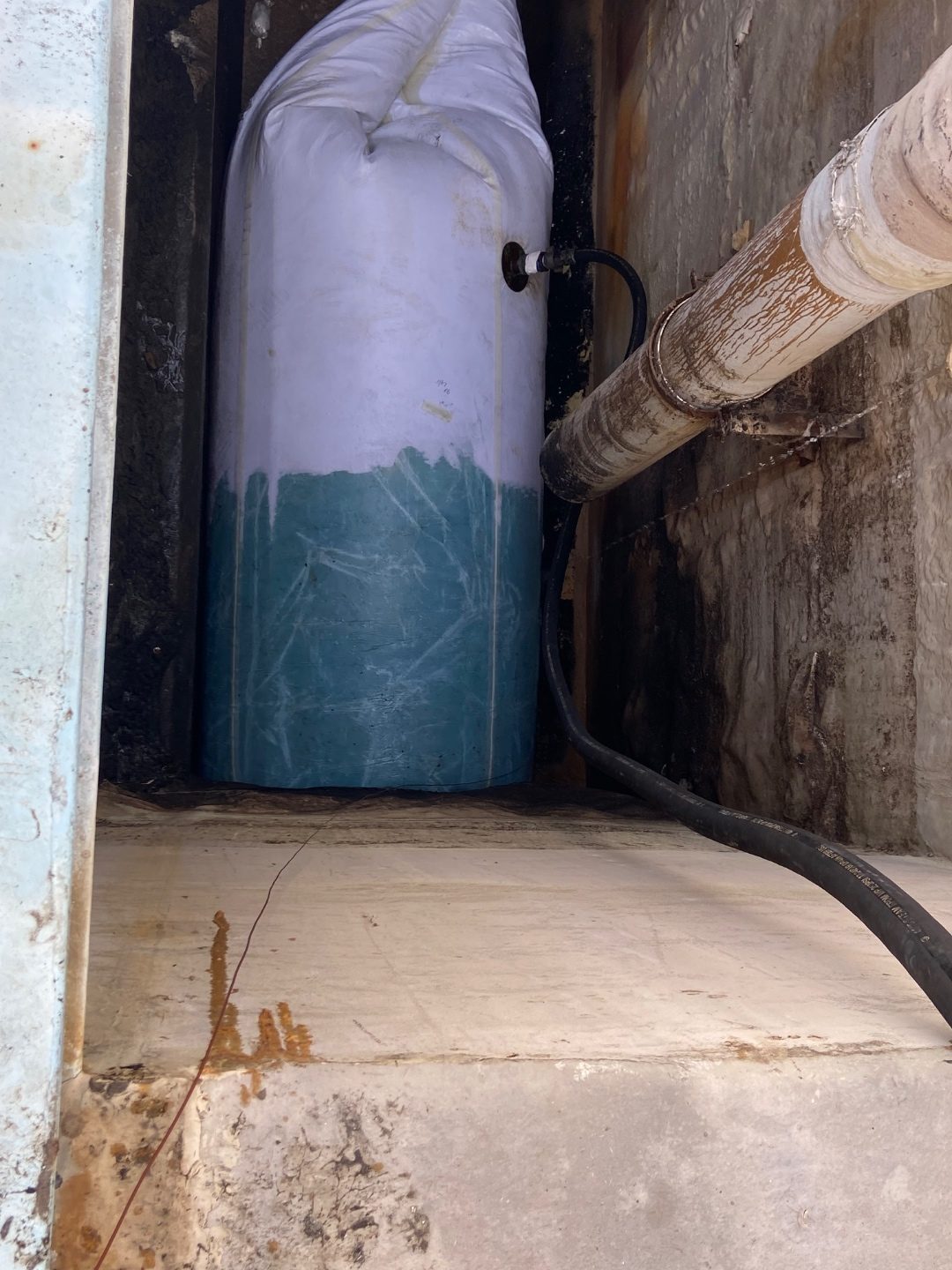
When the job calls for open-cut access, we're set up for it.
Not every host pipe can be lined through existing manholes. For collapsed, offset, or large-diameter runs — or when access dictates it — CEI installs pull-in-place liners per ASTM F1743. The wet-out liner is pulled through the host pipe from a staging trench, inflated to the pipe wall, and cured in place with the same rigor as an inversion install.
- ASTM F1743-compliant pull-in-place installations
- Trench-box staged wet-out for large-diameter and heavy-wall liners
- Steam or hot-water cure sized to the liner and host pipe
- Coordinated with excavation, bypass, and shoring plan
Sized and specified for the work Florida actually needs.
From residential collector lines to large-diameter interceptors, CEI carries the equipment and resin systems to match the pipe.
Diameter range
6-inch to 96-inch host pipes. Round, egg-shaped, and elliptical geometries. Circular liners for gravity mains; specialty products for pressure applications on request.
Host materials
Vitrified clay, concrete, ductile iron, cast iron, corrugated metal, brick, HDPE, and PVC. CEI's install methodology accounts for host material condition — including partially collapsed and deteriorated pipe.
Resin systems
Polyester, vinyl ester, and epoxy resin systems selected per project requirements — including H2S-resistant vinyl ester for force main receiving structures and downstream mains.
Cure methods
Steam cure for standard mainline production. Hot-water cure available for large-diameter installations and specifications that require it.
Have a bid, a CCTV report, or an emergency line?
Send the scope. We'll come back with production rates, MOT approach, and a real number.